
Light Roast Grinder Evolution: Why Modern Design Works
By Omar Farouk • 23rd Feb
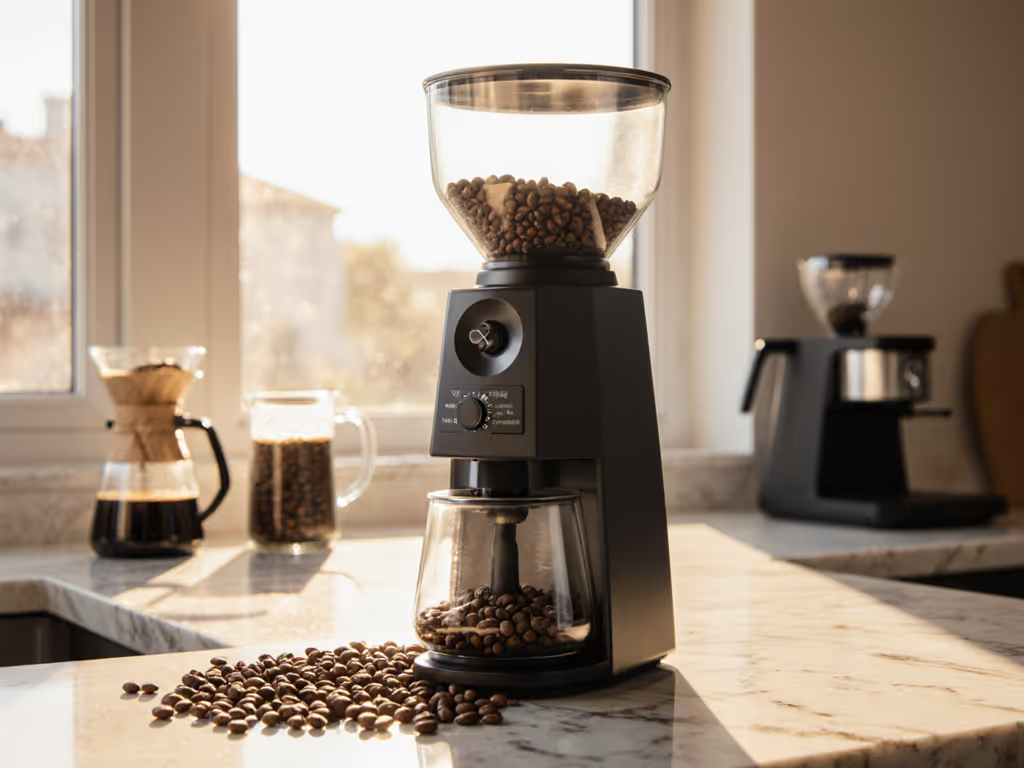
Light roast grinder evolution has transformed how we extract flavor from high-density beans, and specialty coffee grinder technology has never been more accessible to home brewers. Yet the story of why modern grinders work differently (and why that matters for light roasts specifically) is often overlooked in favor of feature lists and brand hype.
The truth is simpler and more encouraging than it seems: understanding what changed, and when, teaches you how to choose a grinder that actually fits your workflow, tastes, and budget. This guide walks through the questions that matter most.
Why Do Light Roasts Demand Different Grinding Strategies?
Light roasts carry density and hardness that medium and dark roasts don't. After roasting, the beans are denser, more compact, more prone to fracturing unevenly. When a grinder's burrs aren't sharp or precise enough, or when particle distribution spreads too widely, light roasts suffer immediately: fines (ultra-fine powder) settle and over-extract, while boulders (oversized chunks) under-extract. The result? A shot that tastes bitter and hollow, or a pour-over that's thin and sharp.
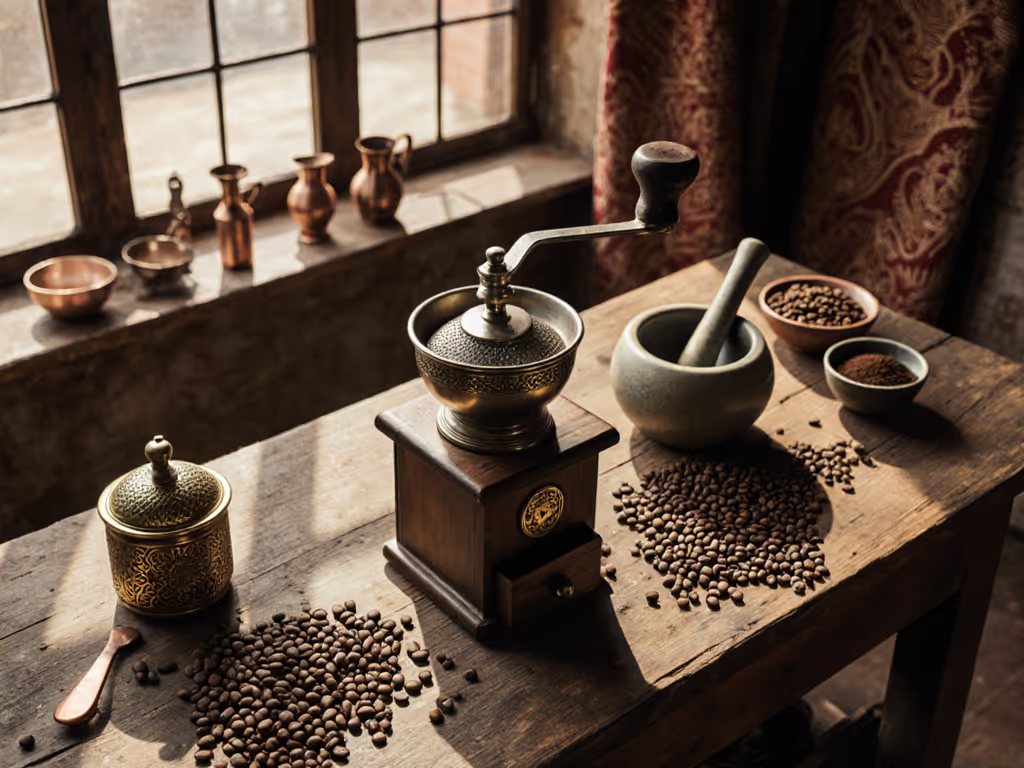
This is where grinder evolution becomes practical. The modern grinder wasn't designed just because engineers enjoyed a challenge (it was built because light roast extraction specifically revealed the limits of older equipment). Compare a hand-cranked grinder from the 1840s, which relied on friction and human strength, to a modern burr grinder with electronically controlled rotation speed: the modern grinder's consistency and sharpness directly solve the hard-bean grinding challenge that light roasts expose. For broader context on design milestones, explore our evolution of coffee grinders.
How Did We Get From Hand-Crank to Precision?
The 19th-Century Shift: From Whole Beans to Portability
When Peugeot introduced their refined hand-cranked coffee grinder in 1840, it was revolutionary, not because it ground perfectly, but because it could be used at home, consistently, without a grinding mill bolted to a wall. The burrs were simple friction cones, and the work was manual. If you wanted fine grounds, you cranked longer. If you wanted coarse grounds, you stopped sooner. Adjustment was either trial-and-error or intuition.
This matters because home roasting and grinding remained tightly linked through the 19th century. Few people bought pre-ground coffee; most roasted at home, then ground immediately. The grinder's imprecision was offset by the freshness of the roast and the brewer's willingness to adapt their technique.
The Industrial Turning Point: Electricity Changes Everything
In 1913, Hobart Manufacturing Company introduced the first electric coffee grinder for commercial use. Electric motors meant consistent speed, no hand fatigue, and (crucially) burrs that stayed sharp longer because they ran at optimized RPM. Commercial roasters began selling pre-ground coffee, which meant grinders had to perform consistently across thousands of cups, not just for one person's breakfast.
This pressure from consistency demand is why specialty coffee grinder innovation accelerated in the late 20th century. When you're grinding beans for paying customers, even small variations in particle size (variations invisible to the naked eye) affect extraction measurably. That need drove refinement: better alignment, sharper burr geometry, and electronic controls that maintained consistent speed under load.
What Changed Most in Modern Grinder Design?
Burr Geometry and Alignment
Older grinders, whether hand-cranked or early electric, used simple conical or flat burrs with wide tolerances. A wobble of a millimeter didn't matter much if you were grinding beans for a pot of drip coffee with loose water ratios.
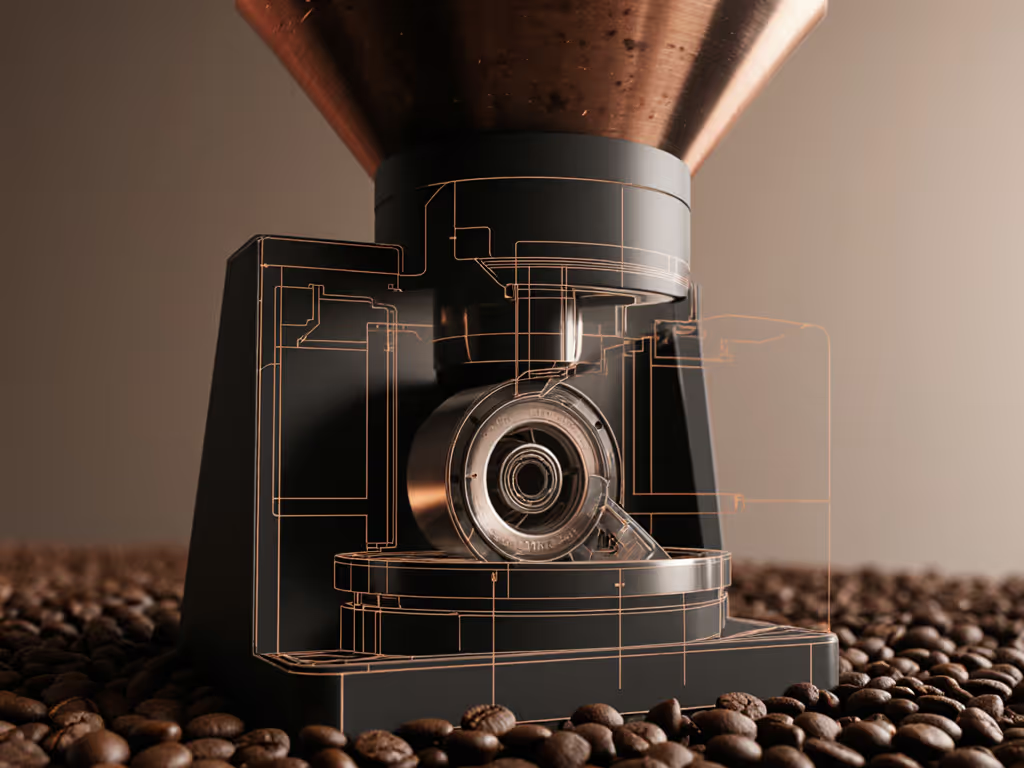
Light roast extraction changed that math. High-density beans and precise brewing methods (espresso, pour-over with grams of water) mean that if one burr sits slightly offset from the other, every pass through the grinder grinds unevenly. Modern grinders use precision-cast or milled burrs with tight tolerances, and many include alignment shims to ensure burr faces stay parallel even with regular use.
Why does this matter in practice? Imagine teaching someone to dial in a grinder (the way I once taped a card to my cousin's grinder reminding her to change one variable at a time). If her burr wobbled, she'd adjust the grind size, taste, note the result, then adjust again. But each "sample" would carry hidden noise from misalignment. After a few iterations, frustration sets in because the grinder itself wasn't responding predictably.
Modern burr design removes that hidden variable.
Heat Management and Retention
When Jabez Burns patented his self-emptying roaster in 1864, one of its key features was a cooling tray that could be mounted to the front. The innovation wasn't flashy, but it solved a real problem: roasted beans continue to cook if they sit in the roaster. Cooling fast preserves flavor.
The same principle applies to grinding. Friction during grinding generates heat (minor in hand-cranked grinders because you work slowly, but significant in high-speed electric burr grinders). Light roasts, which rely on brightness and clarity, suffer if that heat causes subtle over-roasting during grinding. Modern grinders address this through:
- Slower motor speeds: Many burr grinders now run at 400 to 600 RPM instead of 1500+, reducing friction heat while maintaining throughput.
- Geometry that disperses heat: Newer burr designs route hot material away from the grinding zone before the final output.
- Shorter retention: Older grinders trapped ground coffee between burrs for 10 to 30 seconds after grinding stopped. Modern designs, especially single-dose capable models, hold grounds for under a second, minimizing staling from heat and air exposure.
Retention is particularly important because when grounds sit between the burrs, they're slowly exposed to air (oxidation) and leftover heat. For light roasts, which contain subtle volatile compounds, even 20 seconds of retention can dull brightness noticeably. Learn why grinder retention matters and practical ways to keep it low.
Grind Scale Precision
Hand-cranked grinders offered no indexed grind sizes. You felt the mechanism and judged by intuition. Early electric grinders added rough numbered dials: 1, 2, 3, etc., often spanning 8 to 12 positions across the full range from ultra-fine to coarse.
Light roasts and espresso exposed a flaw: the middle ranges (where both live) were compressed. Positions 4, 5, and 6 might cover the entire usable espresso range, making fine adjustments impossible. You'd dial to 4, get channeling (water flowing through too fast, uneven extraction). Dial to 5, and suddenly the shot was too slow. No middle ground. To choose the right adjustment system for your needs, see our stepped vs stepless comparison.
Modern specialty coffee grinders address this through:
- Higher click count: 30, 40, or even 50 distinct positions across the range, with many clicks concentrated in the espresso and pour-over zones.
- Micro-adjust features: Secondary fine-tuning knobs or weighted dials that let you dial between full clicks.
- Labeled starting points: Grinder manufacturers now publish tested starting positions for different brew methods, reducing guesswork.
Change one variable, taste twice, write it down. Modern grinder design makes this principle actionable because the scale is fine enough that your changes are meaningful, and the grinder's consistency means your notes actually reflect the adjustment, not random noise.
Why Should You Care About This History?
Because it teaches you what to prioritize when evaluating a grinder.
If a grinder lacks:
- Sharp, aligned burrs: You'll fight inconsistency with light roasts. The grinder becomes the bottleneck, not your technique.
- Low retention: You're staling coffee between shots or brews. For light roasts, this is tasting loss you pay for but never see (the brightness just seems to fade brew to brew).
- Precise grind scales with adequate click count: You'll overshoot or undershoot in the range that matters most, wasting beans while dialing in.
Modern grinder evolution solved these three things explicitly because specialty coffee growers, roasters, and baristas made it clear that light roasts demand precision. You don't need the fanciest electronic controls or the trendiest brand name. You need a grinder that holds those three principles.
What Does This Mean for Your Next Grinder?
Start simple: Identify your primary brew method (espresso, pour-over, Aeropress, whatever you use 80% of the time). That's your baseline.
Check the specs that matter: Ask whether the grinder has indexed burr alignment, what the retention rate is, and how many click positions are available in the range you'll actually use (not the full range, just your zone).
Test consistency before buying: If possible, ask the seller if you can grind a small sample and inspect the particle distribution by hand. Light roast burrs should produce mostly uniform particles with very few visible fines or boulders.
Accept that grinder choice is method-specific: A grinder optimized for espresso may not work beautifully for French press, and vice versa. Honesty about your workflow saves money and frustration later. Then lock in your settings with our grinder dialing-in guide.
Dial in methodically: Once you have your grinder, use it the way modern design intended. Change one setting at a time, brew twice from each setting, note what you taste, then move forward. Light roasts are forgiving if you're systematic, but punishing if you change three variables at once and can't untangle the cause.
The evolution of light roast grinder technology isn't about owning the newest model; it's about understanding what precision and consistency actually unlock in the cup. Modern grinder design works because it was built to answer questions that light roasts kept asking. Let that history guide your choice, and you'll skip the analysis paralysis that buries so many new enthusiasts.
Related Articles