
Dry vs Humid: Grinder Performance by Climate
By Elena Petrescu • 28th Apr
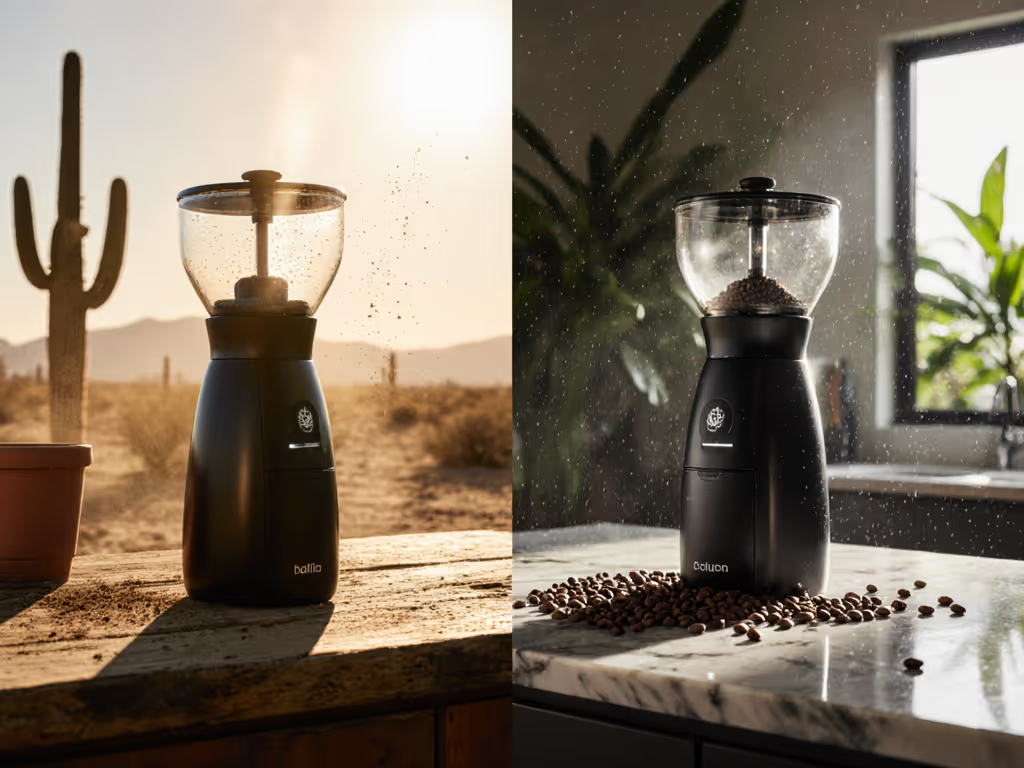
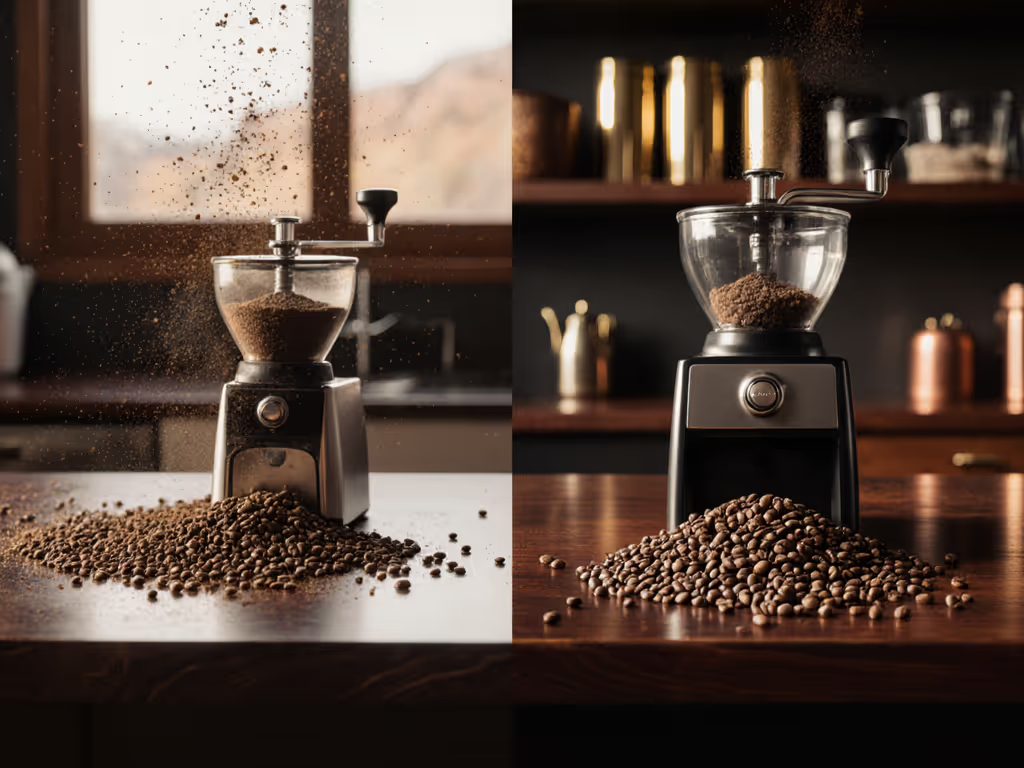
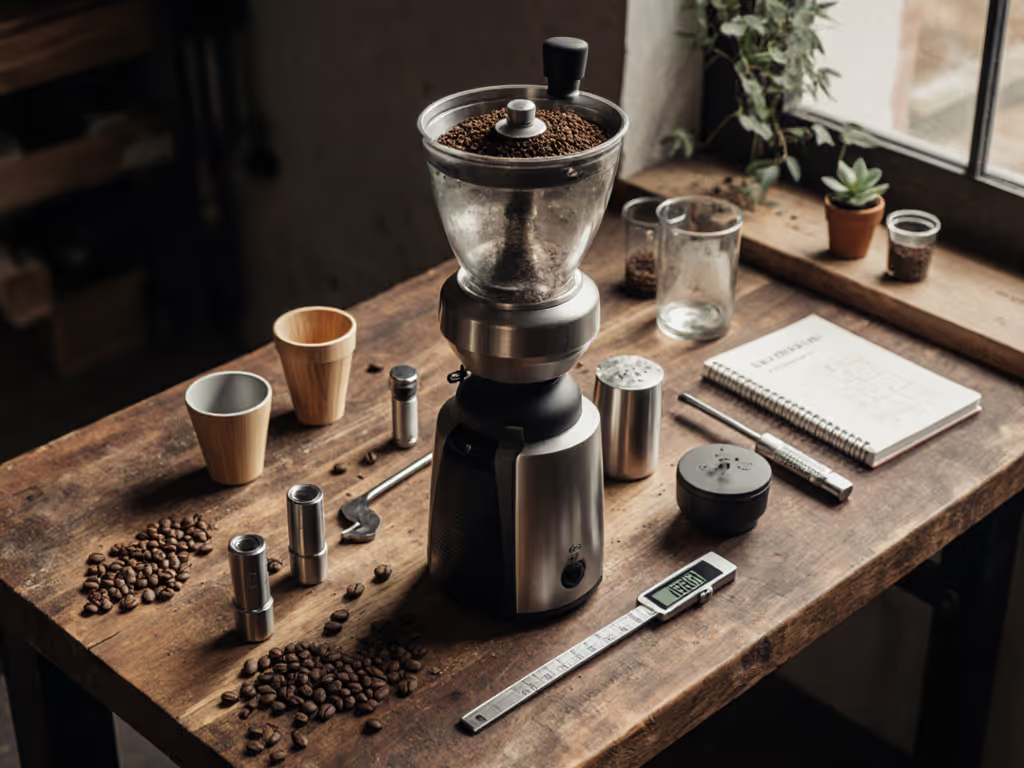
Dry vs humid climate grinding is one of the most overlooked variables in achieving repeatable espresso and filter extraction. Your grinder's ability to hold calibration depends as much on atmospheric conditions as it does on burr geometry or motor design. I've observed this firsthand: inconsistent extraction, unexpected retention spikes, and premature recalibration are often symptoms not of equipment failure but of unmanaged environmental drift. If retention is a recurring issue, see our grinder retention explainer for causes and fixes.
The Climate-Calibration Connection
Moisture in the air (and the absence of it) fundamentally alters how beans behave during grinding and how your grinder performs mechanically. Most discussions around grinder consistency focus on internal alignment, burr wear, or motor stability. Yet regional climate grinder performance is the silent variable that separates consistent café-quality shots from frustrating day-to-day variance.
When environmental conditions shift, particle size distribution changes, retention patterns change, and the calibration you dialed in this morning may not hold by afternoon. If you want the science behind why distribution shifts change flavor, see our particle distribution and extraction guide. This matters because even modest shifts in grind fineness (0.5 to 1.5 mm in adjustment) can push espresso from balanced sweetness into sourness or bitterness. For filter coffee, humidity-induced clumping can choke flow and flatten clarity. Over time, these small inconsistencies erode confidence and waste expensive beans.
Understanding Humidity's Effect on Grinding Consistency
Moisture and Static Electricity
High humidity environments (above 60% relative humidity) introduce a paradox: while water vapor is present in the air, ground coffee particles acquire moisture that changes their electrical properties and adhesion behavior. Moisture trapped in the bean's surface reduces electrostatic charge buildup (the very charge that causes particles to cling to burrs, chute walls, and each other during grinding).[3] For a climate-specific breakdown of moisture effects and fixes, read our humidity grinding guide.
This sounds beneficial, but it creates problems:
- Clumping and cohesion: Moisture-laden particles stick together, forming clumps that jam chutes and create uneven dose distribution. A 20 g dose may actually deliver only 18-19 g of ground coffee if 2-3 g is trapped as a damp mass in the burr chamber.
- Altered particle size distribution: Clumped particles compress unevenly, making fine particles finer and leaving more boulders. This bimodal distribution (a fact confirmed by extraction yield testing in humid labs) produces channeling in espresso and inconsistent saturation in pour-over.
- Retention and staling: Moisture prevents free flow, causing coffee to linger longer in the grinder. The longer grinds sit, the more volatile aromatic compounds evaporate or degrade, flattening your cup profile before water ever touches the grounds.
Temperature and Thermal Behavior
During a Saturday morning service a few years ago, our espresso flavors drifted noticeably. Shots slowed from our baseline 27-30 seconds to 35+ seconds mid-way through the rush. Acidity dropped, leaving the cup flat and lifeless. A quick inspection found our burr carriers warming from continuous grinding and motor friction. The grinder hadn't moved; the burrs hadn't dulled. What had shifted was mechanical alignment, loosened by thermal expansion of brass and steel components. We purged, realigned, and service recovered (but that lesson never left me). Learn how to manage heat and avoid thermal drift in our grinder temperature stabilization guide.
In humid climates, thermal instability compounds. Moisture acts as a heat sink, absorbing energy from the grinding process and delaying cooling cycles. In dry climates, the opposite occurs: rapid heat dissipation can cause thermal contraction of moving parts, paradoxically tightening tolerances mid-grind and requiring adjustment in the opposite direction than expected. Neither scenario supports stable extraction. Alignment and drift separate toys from tools in service.
Dryness and Low-Humidity Grinding Challenges
Static and Particle Adhesion
Low-humidity environments (below 30% relative humidity) trigger aggressive electrostatic charge accumulation. Ground coffee particles (especially fine particles destined for espresso) develop opposing charges and cling to each other, to burr surfaces, and to chute walls with remarkable force. Low humidity static solutions require active mitigation: Start with the fundamentals in our static electricity fixes for grinders in arid climates.
- Burr and chute adhesion: Fines coat the burr chamber, reducing effective grinding volume and causing retention to creep upward. A grinder that retained 0.2 g on a humid day may retain 0.8-1.2 g in arid conditions, invisible at first glance but devastating to workflow and shot consistency.
- Dose inconsistency: Static clumping makes dose delivery erratic. A single-dose workflow designed for repeatable 20 g charges becomes unpredictable when 20 g splits into a freely-flowing 16 g main mass and a 4 g static-bound cluster that may or may not land in your basket.
- Extraction yield variance: Research comparing humidity-controlled test sessions shows extraction yield spreads of 1-3% between humid and dry grinding conditions when grind setting is held constant. That gap translates directly to perceived sourness (under-extraction) or bitterness (over-extraction).
Rapid Thermal Cycling
Dry air accelerates cooling and evaporative heat loss from the motor and grinding chamber. This rapid thermal cycling stresses mechanical components, particularly plastic adjustment screws and brass carriers that expand and contract at different rates. Tolerances shift in ways that require frequent recalibration, exactly the opposite of the stability professionals need.
Electrostatic energy also generates its own heat signature. In dry conditions, this charge dissipates inefficiently, and the accumulated static itself can warm the coffee milliseconds before it exits the grinder, altering hydration dynamics in subtle but measurable ways.
Calibration Strategies by Climate
High-Humidity Regions
-
Baseline Recalibration Every 3-5 Days: In humid climates, resist the urge to dial in once per week. Log your baseline grind setting on entry (burr position, adjustment marks) and check it mid-service. Expect the grind to run 0.5-1.5 mm coarser due to clumping compacting and moisture reducing cutting efficiency. Some professionals manually adjust finer to compensate; others rely on refocusing the burr carrier or purging a test gram to break up moisture cohesion.[3]
-
Dose-Down Protocol: When humidity exceeds 65%, reduce your standard dose by 10-15% and use a high humidity clumping prevention strategy:
- Grind in shorter pulses (2-3 second bursts) to allow internal moisture to dissipate between pulses.
- Tap the group head or basket gently after dosing to break static clusters before tamping.
- Use a WDT (Weiss Distribution Technique) or blooming pass in pour-over to separate fines from boulders.
- Thermal Monitoring: Track burr temperature by touch or infrared thermometer every 20-30 shots. If it exceeds tolerance (typically 50-60 C for espresso-grade burrs), interrupt service for a 5-minute cool-down. This holds calibration and prevents the creeping sourness and channeling that follows thermal drift.
Low-Humidity Regions
- Static Mitigation: Introduce moisture deliberately without compromising grind quality:
- Use a spray bottle to lightly mist beans (2-3 sprays per 100 g, 12-24 hours pre-grind) to raise bean surface moisture to ~5-6% equilibrium moisture content.
- Store beans in opaque, sealed containers to maintain humidity inside the package.
- Place a small humidifying element (passive silica-based or active USB humidifier) near, but not touching, your grinder workspace to raise ambient RH to 35-40%.
-
Burr and Chute Maintenance: In dry conditions, static binding accelerates, so purge after every 10-15 grinder rotations with 2-3 grams of sacrificial beans (old, stale coffee works fine). This clears static-bound fines and maintains consistent burr contact. Clean the chute weekly with a soft brush to remove electrostatic layers.
-
Adjustment Damping: Dry heat causes rapid thermal contraction. If your grind setting drifts finer over 30 minutes, this is thermal retraction, not burr wear. Loosen your burr carrier adjustment by 0.25 mm and retest. If it drifts coarser, tighten 0.25 mm. Micro-adjustments every 15-20 shots (not every 100) hold calibration in arid climates and prevent the frustration of chasing a moving target.
Regional Considerations and Equipment Selection
Climate-Specific Grinder Recommendations
Not all grinders respond equally to climate stress. Serviceable, rigid designs with minimal plastic adjustment mechanisms and sealed burr carriers perform most predictably across humidity ranges.
For Humid Climates: Prioritize grinders with open or easily-accessible chutes and burr chambers to facilitate moisture inspection and quick purging. Stainless steel components resist corrosion from high humidity better than bare brass or aluminum.
For Dry Climates: Favor grinders with larger burr carriers and thermal mass (heavier motors, broader heat sinks) to dampen rapid cooling cycles. Static dissipation features (conductive chutes or grounding straps) mitigate charge buildup.
For Variable Climates: If your region cycles between humid summers and dry winters, grinder flexibility matters. Look for models with independent burr carrier locking mechanisms (not one-piece castings) so you can apply different mechanical tolerances by season.
Maintenance and Longevity Across Seasons
Preventive Inspection Intervals
Humid climates accelerate burr dulling and introduce corrosion risk on exposed fasteners. Schedule burr inspection every 3-4 months rather than annually. In dry climates, thermal stress accelerates plastic fatigue; inspect adjustment screws and carrier mounts quarterly.
Storage and Off-Season Care
When not in daily use (seasonal coffee breaks are common in many regions), store your grinder with silica packets inside the chamber (humid areas) or in a sealed, breathable bag (dry areas). This prevents dormant moisture absorption or electrostatic dust accumulation.
Troubleshooting: Climate-Driven Problems
| Symptom | Dry Climate | Humid Climate |
|---|---|---|
| Grind runs progressively finer over 30 min | Thermal contraction; loosen burr carrier 0.25 mm | Moisture evaporation from ambient air; purge and re-wet beans |
| Extraction yield drops 2-3%; shots sour | Static buildup increasing fines rejection; spray beans lightly | Clumping hiding dose; break apart damp masses before dosing |
| Retention spikes unexpectedly | Burr surface electrical bonding; purge aggressively; consider static spray | Moisture in chamber; deep clean burr carrier with dry cloth |
| Calibration requires daily adjustment | Motor cooling too rapidly; use thermal damping (insulation wrap) | Humidity shift; allow grinder to acclimate 10-15 min after transport |
Broader Implications for Extraction and Cup Quality
Weather-driven grinder instability is fundamentally an extraction problem. When grind distribution drifts (either coarser (under-extraction, sourness) or finer (over-extraction, bitterness)) your espresso or filter coffee suffers immediate, perceived degradation. The technical culprit is moisture or thermal misalignment; the sensory outcome is loss of clarity, sweetness, and complexity.
Professionals who hold calibration across climate seasons invest in grinder maintenance as seriously as they invest in bean sourcing. An under-calibrated, thermally unstable grinder in a humid climate will extract a 19-21% yield range shot-to-shot. The same grinder, properly serviced and climate-managed, holds 19.5-20% extraction. That 0.5% consistency margin is the difference between predictable, repeatable café-quality espresso and daily guessing games.
Next Steps: Dialing In Climate-Aware Protocols
To move beyond generic grinder recommendations and into climate-specific mastery:
- Log your baseline calibration (burr position, ambient humidity, temperature) over two weeks to establish seasonal patterns in your region.
- Test extraction yield at fixed grind settings across high and low humidity days using a refractometer or TDS meter. Document the range; this becomes your "normal variance" for your climate.
- Inspect your grinder's construction: note which components are plastic, brass, or stainless. Plan maintenance priorities accordingly (plastic adjustment screws wear faster in humid climates; brass corrodes if unsealed).
- Network with local coffee professionals who share your climate. Their tried calibration practices transfer directly; their shortcuts save months of trial-and-error.
Ultimately, grinder performance by climate is a humbling reminder that repeatability isn't a hardware problem alone, it is a systems problem. Burr design matters. Motor stability matters. But the air you grind in matters just as much, and ignoring it is a silent tax on every cup you pull.
Related Articles