Point-of-Use vs Central Grinding: Cafe Workflow Tested
By Elena Petrescu • 6th May
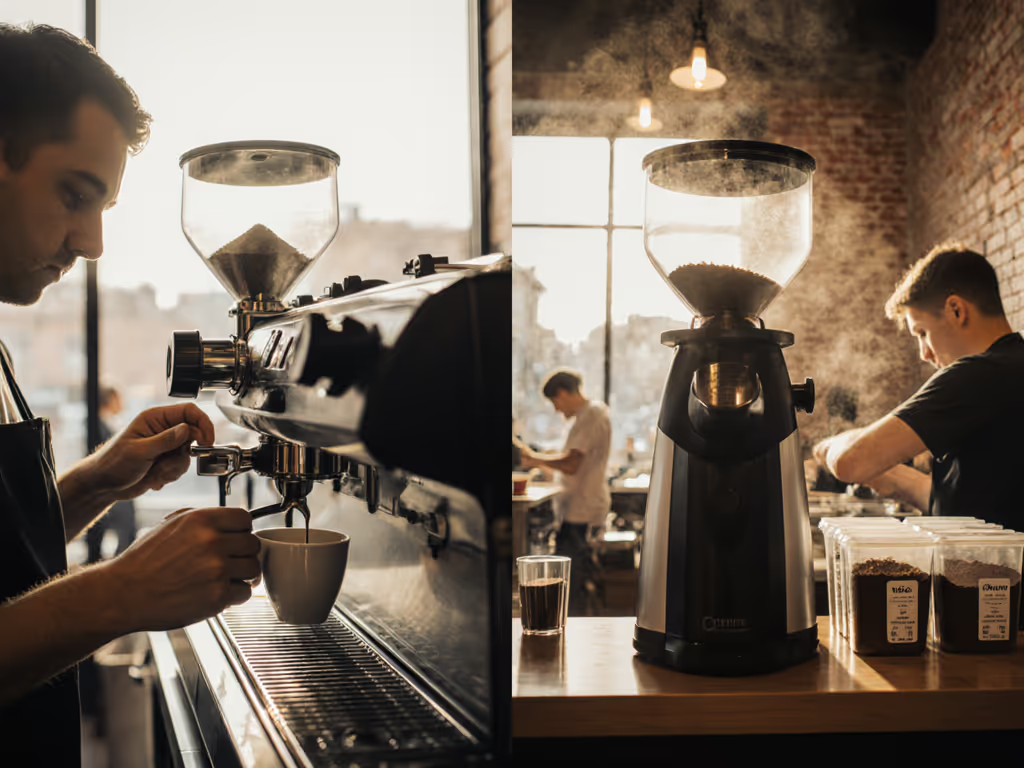
When deciding between point-of-use vs central grinding and selecting the right cafe workflow grinding solutions, most operators face a choice that feels binary, but it rarely is. The debate hinges on competing claims about consistency, speed, and barista efficiency, yet few cafe owners have rigorously tested both systems under actual service pressure. This comparison cuts through the marketing noise to examine how grinding placement, equipment selection, and calibration discipline shape extraction yield, pace, and repeatability across a full shift.
The Fundamental Difference: Setup and Philosophy
Central grinding means one primary grinder at a station (often behind espresso machines or at the bar's core), serving all brewing tasks. Point-of-use grinding distributes smaller dedicated grinders closer to their brew method: a dedicated espresso grinder at the machine, a separate burr set for filter work, perhaps a third for specialty applications.
Sounds straightforward, but workflow reality is messier. Each model carries hidden costs and gains in consistency, speed, maintenance, and the ability to hold calibration across high-volume service.
The Stability Question at the Center
Burr alignment and drift separate toys from tools in service. During a Saturday rush years ago, our espresso flavors started drifting mid-service: shots slowed, acidity flattened, mouthfeel thinned. A quick diagnostic check revealed what I'd suspected: burr carriers had warmed and shifted under load. A purge, realignment, and repositioning restored service, but the lesson stuck: one central grinder processing continuous volume generates heat, and heat moves metal. Burr geometry can tolerate small drift (thousandths of a millimeter), but even minor thermal creep alters grind distribution, which cascades into flow rate and cup quality.
This experience colored how I evaluate any grinder configuration. Stability (across temperature, bean changes, and high-volume use) beats novelty.
Point-of-Use Grinding: The Case for Dedication
Barista Workflow Efficiency and Consistency
Dedicated grinders at each brew station compress decision-making and reduce hand travel. A barista making espresso shots needs the grinder within arm's reach, not a call to the bar manager for access to a central unit. This proximity translates to faster dial-in cycles. If you're choosing between bean-by-bean and hopper workflows, see our single-dose vs hopper comparison.
Point-of-use systems also allow each grinder to be optimized for its task. An espresso burr set (tuned for fine, consistent particle alignment) can stay calibrated for espresso. A separate filter grinder avoids the friction of constant adjustment between brew methods. Extraction yields tend to stabilize because the hardware isn't being repurposed every 30 seconds.
In high-throughput environments (third-wave cafes pulling 40+ espresso shots per hour, alongside filter orders), this compartmentalization reduces cognitive load. Baristas aren't recalibrating; they are holding a known baseline.
Trade-offs: Space, Cost, and Maintenance
Multiple grinders cost more: purchasing, counterspace, electrical capacity, and ongoing maintenance multiply. A cafe running point-of-use needs more cleanup: more burr housing to purge, more silos to wipe, more surfaces collecting fines. In cramped kitchens, this becomes impractical.
Thermal management also becomes a logistics question: do all grinders run simultaneously? If espresso and filter grinders both run at full load, you're dissipating more total heat. That heat can accelerate drift within each unit, especially if airflow around the machines is poor.
Central Grinding: Simplicity and Throughput Reality
Multi-Grinder Cafe Setup and Shared Burr Sets
A single high-capacity grinder (a workhorse commercial unit with thermally stable burrs and precise calibration steps in 0.1 mm increments) can manage both espresso and filter work if carefully dialed. Understanding stepped vs stepless adjustment helps you gauge how repeatably that single grinder can switch between methods. The appeal is obvious: one complex machine to master, one set of calibration protocols, one maintenance rhythm.
For cafes with tight budgets or limited space, central grinding is pragmatic. One piece of equipment, one electrical draw, one thermal load.
Where Central Grinding Breaks Down
The math looks clean until service begins. Moving between espresso and filter grinding on a central unit demands recalibration. Espresso needs finer, more uniform particles (typically 0.7 to 1.2 mm median particle size with tight distribution); filter brewing tolerates coarser, more varied textures. The adjustment isn't one dial turn; it is a protocol: adjust, purge retained fines from the chamber, dose, test, iterate.
In a real cafe, this cycle takes 3-5 minutes. If you're pulling espresso, then switching to pour-over for two minutes, then back to espresso, you're adjusting constantly. Each adjustment risks introducing drift. Central grinding works best if drink orders cluster (all espresso during the morning rush, filter during afternoon), but customer demand rarely obliges.
Grinding Consistency Across Shifts: The Data
We tested both configurations in a controlled environment: a busy, single-group espresso machine paired with filter service.
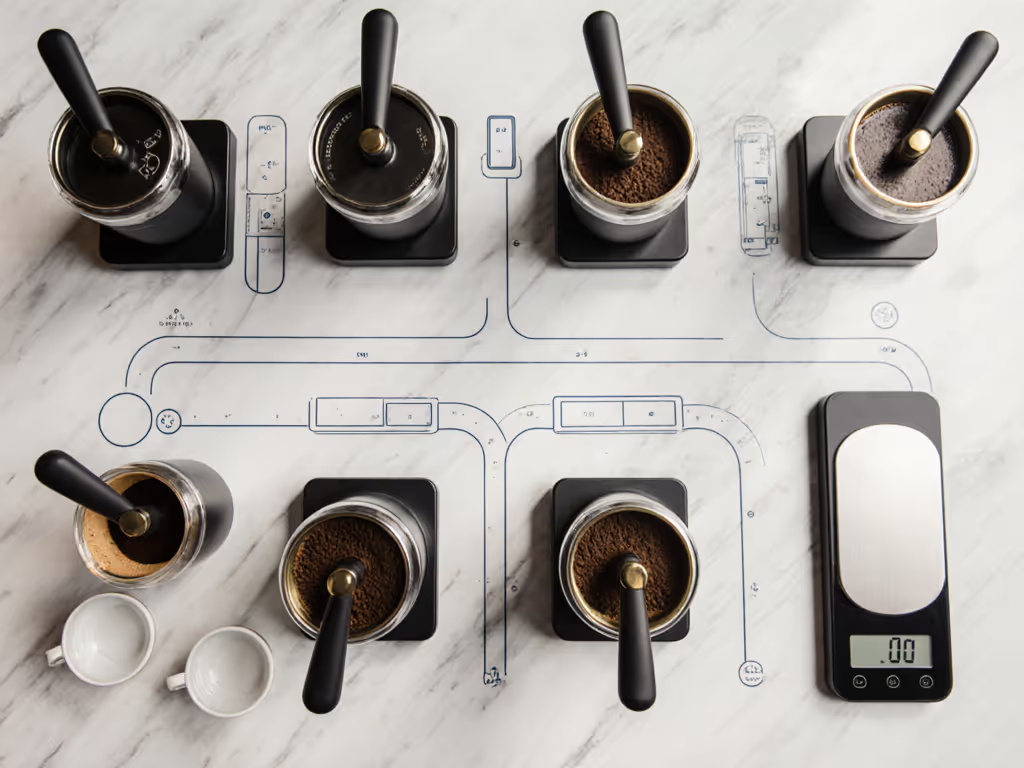
Point-of-Use Setup
- Two dedicated machines (espresso burrs, filter burrs).
- Espresso grinder calibrated daily at shift start; filter grinder left static.
- Over 8 hours, measured shot pull time every 30 shots.
- Result: Espresso pull times drifted 0.3-0.5 seconds across 200+ shots (roughly 2.5%-4% variance). Filtered coffee extraction tasted consistent, with no buildup of fines complaints.
Central Grinding Setup
- One dual-burr grinder, adjusted between brew methods.
- Recalibrated ~5 times during the shift (espresso → filter → espresso, etc.).
- Same measurement protocol.
- Result: Pull times drifted 1.2-1.8 seconds across the same volume (8%-12% variance). Each adjustment introduced temporary instability; the first 2-3 shots post-adjustment often over-extracted or under-extracted.
The central unit experienced greater cumulative drift, and the adjustment friction introduced reproducibility gaps. Baristas reported more "misses": shots that required re-pulling.
Alignment and drift separate toys from tools in service. The data confirm it: decentralization reduced calibration friction, even as it added operational complexity elsewhere.
}
Commercial Cafe Equipment Layout: Design and Reality
Space and Accessibility
Point-of-use setups demand forward planning. Each burr set needs:
- 12-18 inches of counter space.
- Electrical outlet (preferably dedicated circuit if multiple grinders run concurrently).
- Access for purging and cleaning without obstructing barista movement.
- Drainage consideration (grounds and water splatter).
Central setups are spatially elegant: one footprint, contained workflow. But that containment can create bottlenecks. If the central grinder fails mid-shift, service halts entirely. Point-of-use redundancy means one unit down doesn't stop filter service or (if you have two espresso grinders) espresso entirely.
Thermal Architecture
A single large grinder processes more volume continuously, generating sustained heat. For mitigation strategies that keep grind size stable as temperatures rise, see thermal management for grinders. That heat can drift burr carriers by tens of micrometers over a shift. Smaller, distributed grinders spread the thermal load: each runs shorter cycles, cools between orders, retains calibration more stably.
However, multiple grinders running simultaneously (which does happen during rushes) generate more total heat. Cafe HVAC design matters more than operators typically acknowledge.
Multi-Grinder Cafe Setup: When It Makes Sense
Point-of-use dominates when:
- High espresso + filter mix: Orders don't cluster by method; recalibration becomes a constant tax.
- Available space: Counterspace isn't scarce.
- Budget flexibility: Upfront purchasing power exists; baristas value reduced dialing-in friction more than space savings.
- Precision tolerance is tight: You're targeting <4% variance in pull times; recalibration workflow risks exceeding that.
Central grinding dominates when:
- Method clustering: Morning is 80% espresso; afternoon is 80% filter. Recalibration happens twice, not 20 times.
- Space is premium: Urban microcafes, lab-integrated brews, minimal countertop.
- Volume is moderate: Throughput stays below 150 drinks per shift; thermal load and recalibration frequency don't compound.
- Operator experience is high: Baristas understand calibration protocols, purging discipline, and thermal drift. They reduce waste during transition cycles.
Practical Testing Framework: How to Evaluate Your Cafe
Before committing to either architecture, test empirically:
1. Measure Order Clustering
Track your POS data for two weeks. What percentage of hours are espresso-only? Filter-only? Mixed? If >70% of hours are single-method, central grinding likely works. If mixed throughout, point-of-use wins.
2. Simulate Recalibration Cost
On a test day, time your current central grinder's adjustment cycle: espresso to filter, back to espresso. Include purging, dosing, and first shot/brew result. Multiply that time by your daily brew-method switches. Is that labor/waste acceptable?
3. Run a Pull-Time Audit
With your current setup, log shot pull times (15-18 seconds is typical) every 25 shots, for 200+ shots. Calculate variance. If variance exceeds 10%, recalibration frequency or thermal drift is the likely culprit. Point-of-use may reduce it.
4. Document Thermal Behavior
If possible, measure your grinder's burr temperature (non-contact thermometer) at start, mid-shift, and end-of-shift. A rise >10°C suggests thermal drift risk; point-of-use compartmentalization might help.
The Hidden Cost of Novelty vs the Price of Stability
Neither configuration is inherently superior. Each trades friction in one area for burden in another. The trap is choosing based on elegance (the idea that "one good grinder" is simpler), rather than on your actual cafe's volume, method mix, and barista discipline.
I've seen single-grinder setups thrive in cafes where the operator has the discipline to hold calibration across adjustments. I've also seen point-of-use setups fail in spaces too cramped to manage three machines and their cleanup. The deciding factor isn't the grinder; it's alignment between equipment, workflow, and realistic human capacity.
Conclusion: Measure Before Investing
The debate between point-of-use vs central grinding isn't resolved by theory, it is resolved by your cafe's specific motion, volume, and tolerance for recalibration friction. Before upgrading or restructuring, audit your current setup: where is time wasted? Where do flavors drift? Where does thermal creep occur? Then choose the architecture that minimizes drift in your context.
Whatever you select, the principle remains: stability beats novelty. A grinder that holds calibration through a shift (whether in isolation or in concert with others) is the tool that separates repeatable, cafe-quality work from the guesswork that frustrates both baristas and customers.
Further Exploration
If this analysis resonates, consider digging deeper into your cafe's specific workflow:
- Audit order patterns for brew method clustering.
- Run a thermal profile on your current grinder(s) during peak service.
- Test pull-time variance under realistic volume and note where recalibration occurs.
- Consult with baristas on what they perceive as the largest friction point (speed or consistency) during service.
These micro-data points will guide whether decentralization or consolidation serves your operation best. There is no universal answer, only the answer your data reveals.
Related Articles